Table of contents
16
By Salman Khan, OSCP+, Founder of XHack, SRT (Synack Red Team member)
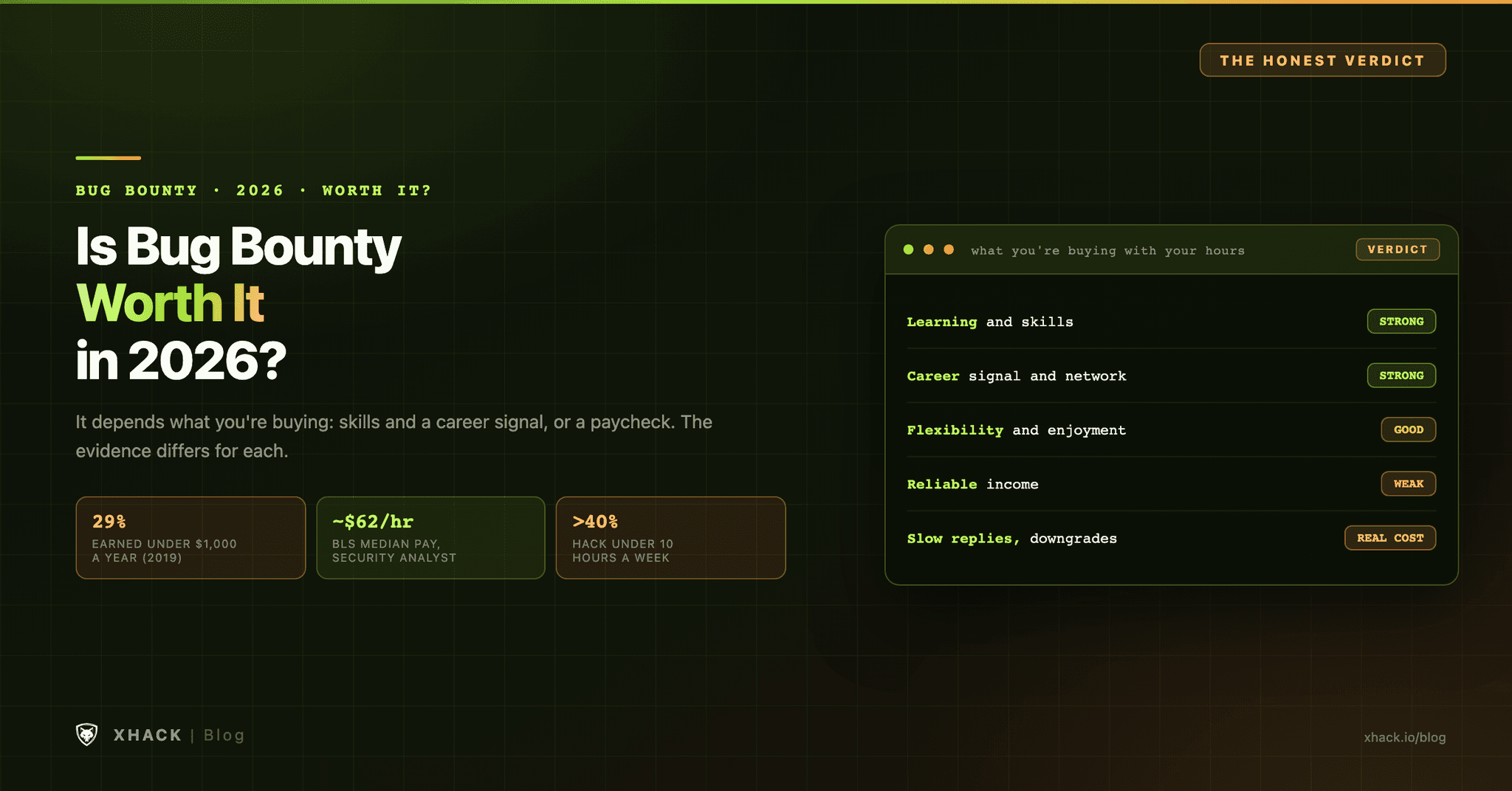
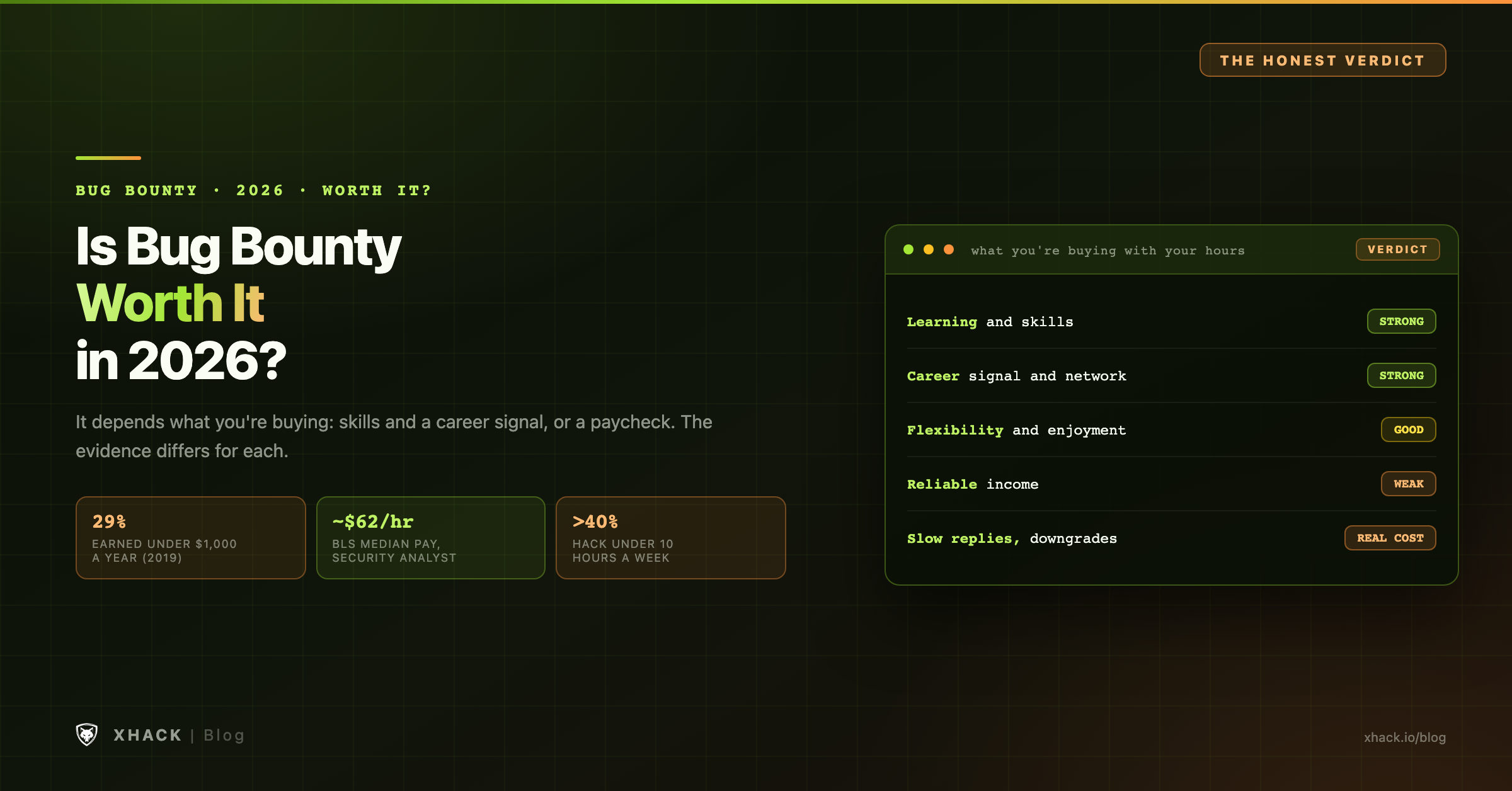
Read this in 30 seconds: Is bug bounty worth it in 2026? As paid learning and a career lever, yes. As reliable income for most people, no.
- The money is thin for most hunters. In the best survey we found, 29% earned under $1,000 a year and 78% under $30,000, and most put in under 10 hours a week.
- Learning ranks second to money. In the same research, learning was hunters’ second-biggest benefit, and career building showed up too.
- There’s a stronger alternative on the hourly numbers. US information security analysts have a median wage of $129,180, and the field is projected to grow 21% from 2025 to 2035.
- The market is tightening. GitHub halved public payouts in July, and HackerOne paused the Internet Bug Bounty.
- Legal risk is lower than it was, not gone. DOJ won’t charge good-faith research under the CFAA, but that’s a policy, not a law.
Whether bug bounty is worth it depends less on the market than on what you’re buying with your hours.
If you’re asking “is bug bounty worth it,” you’re really asking four questions at once: will it pay, will it teach you, will it help your career, and what will it cost you. The honest answer differs for each, and mixing them up is how people end up disappointed.
Here’s the evidence on each, and a four-question test to decide for yourself.
Most advice treats the payoff as one number. The research doesn’t. Akgul et al. asked 159 hunters to rate the factors that matter to them in a peer-reviewed USENIX Security 2023 study. The benefits ranked like this:
| Benefit of bug bounty | Relative importance score |
|---|---|
| Monetary rewards | 0.191 |
| Learning or improving skills | 0.170 |
| Enjoyment or challenge | 0.140 |
| Legal safe harbor | 0.118 |
| Flexibility | 0.095 |
| Career opportunities | 0.091 |
| Community | 0.071 |
| Altruism | 0.062 |
The scores are the paper’s own estimates, meaningful only in comparison with each other. Money comes first, but learning is close behind, and the two together are about 36% of the weight. Is bug bounty worth it? If you want one or both of those, yes. If you’re counting on money alone, the next section matters.
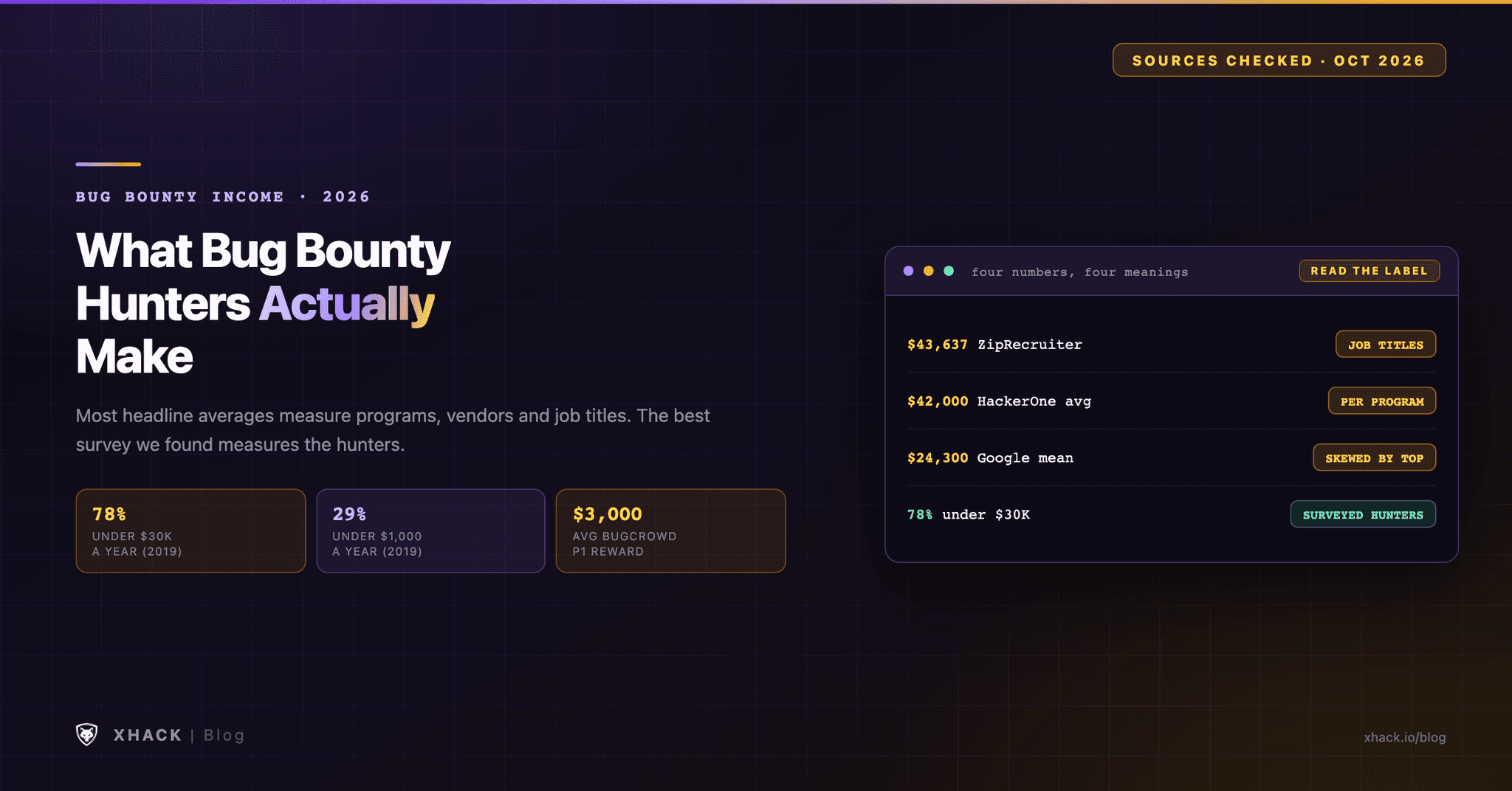
We covered the numbers in detail in our guide to what bug bounty hunters make, so here’s the short version. In the 2019 survey, 28.7% of respondents earned under $1,000 a year, 49.6% earned $1,000 to $29,999, 11.3% earned $30,000 to $74,999, and 10.4% earned $75,000 or more.
Now compare that with a job. The Bureau of Labor Statistics reports a median wage of $129,180 for information security analysts in May 2025. Spread over a 2,080-hour work year, that’s about $62 an hour.
A hunter putting in 10 hours a week works about 520 hours a year. To match $62 an hour, they’d need to earn roughly $32,300 from bounties. In the 2019 survey, about 22% of respondents reported $30,000 or more, and some of those worked far more than 10 hours a week.
So is bug bounty worth it as income, hour for hour? For most people, it isn’t. For the top fifth or so, it can be. That’s an honest reading of old, self-selected data, and the platforms haven’t published a current per-hunter distribution that we could find.
Is bug bounty worth it for a career? Mostly yes, with one caveat. Career-building showed up as a distinct benefit in the research, and Bugcrowd’s 2026 survey of over 2,000 hackers describes part-time hacking as often offset by full-time security roles. Nearly half spend fewer than 14 hours a week hacking, and over 40% keep it under 10.
In other words, most hunters aren’t betting their livelihoods on it. They’re adding it to a security career, or building toward one. Intigriti’s 2022 survey of more than 1,700 ethical hackers found 50% turn to bug bounty hunting to learn, and 66% are considering it as a full-time career, though considering isn’t the same as doing.
The caveat: we couldn’t find a current primary source measuring whether bounty experience raises your odds of getting hired. The skills are real and the job market is strong, with BLS projecting 21% growth from 2025 to 2035 and about 192,900 jobs in 2025, but “it helps your résumé” is a plausible claim here, not a measured one.
Bugcrowd’s hackers say they stay sharp mostly by practicing on new targets (80%) and studying tutorials, blogs and videos (75%). Bounty hunting is a way to get paid for the first of those.
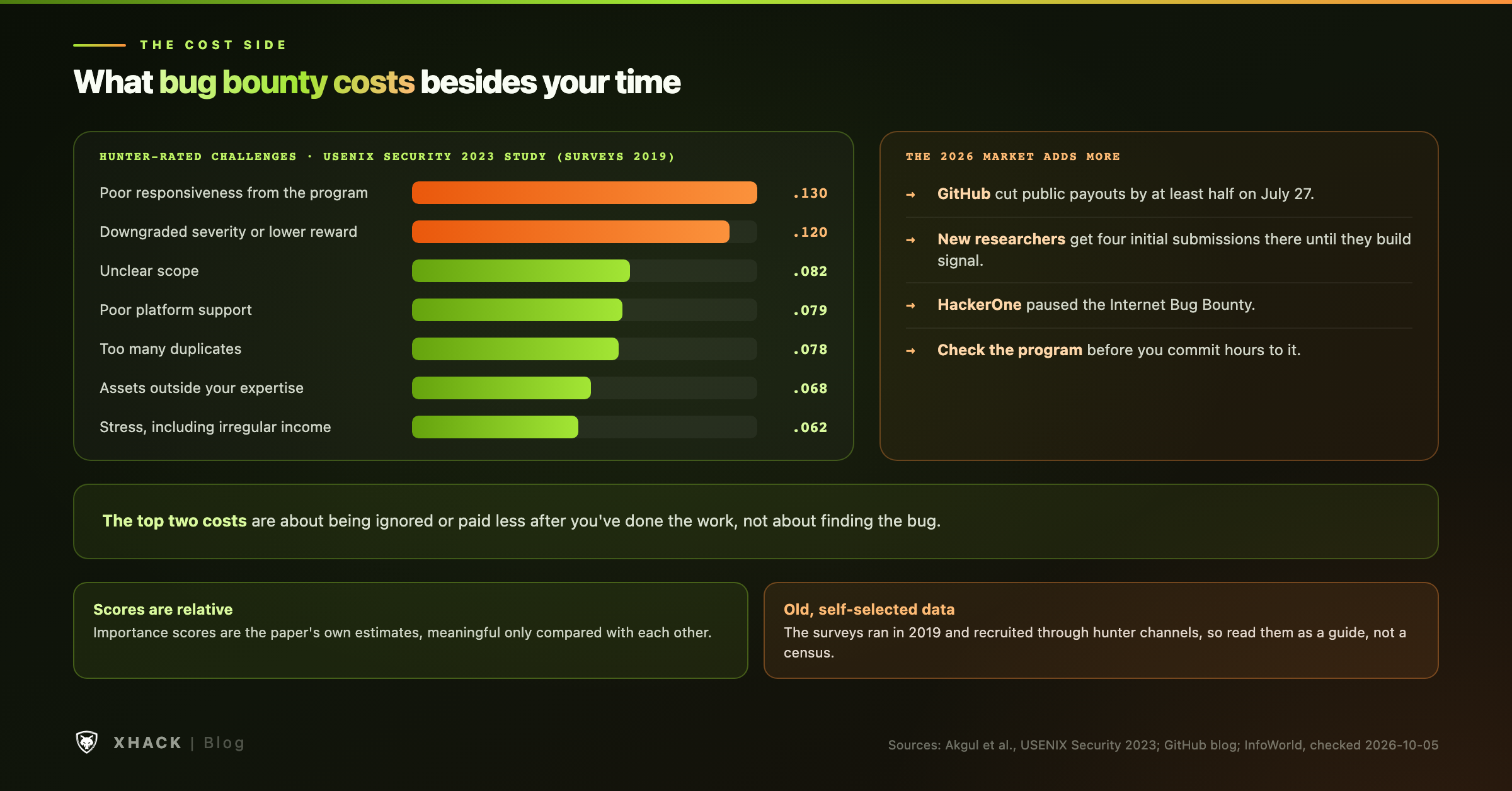
Is bug bounty worth it once you count everything it costs? Money isn’t the only price. The same study asked hunters what makes participation hard, and the top challenges had little to do with finding bugs:
| Challenge | Relative importance score |
|---|---|
| Poor responsiveness from the program | 0.130 |
| Dissatisfaction with responses, such as downgraded severity | 0.120 |
| Unclear scope | 0.082 |
| Poor platform support | 0.079 |
| Too many duplicates | 0.078 |
| Assets outside your expertise | 0.068 |
| Stress and uncertainty, including irregular income | 0.062 |
The top two are about being ignored or underpaid after you’ve done the work. If you’ve ever waited weeks on a triager, you know the feeling. Those costs are real even if your finding is.
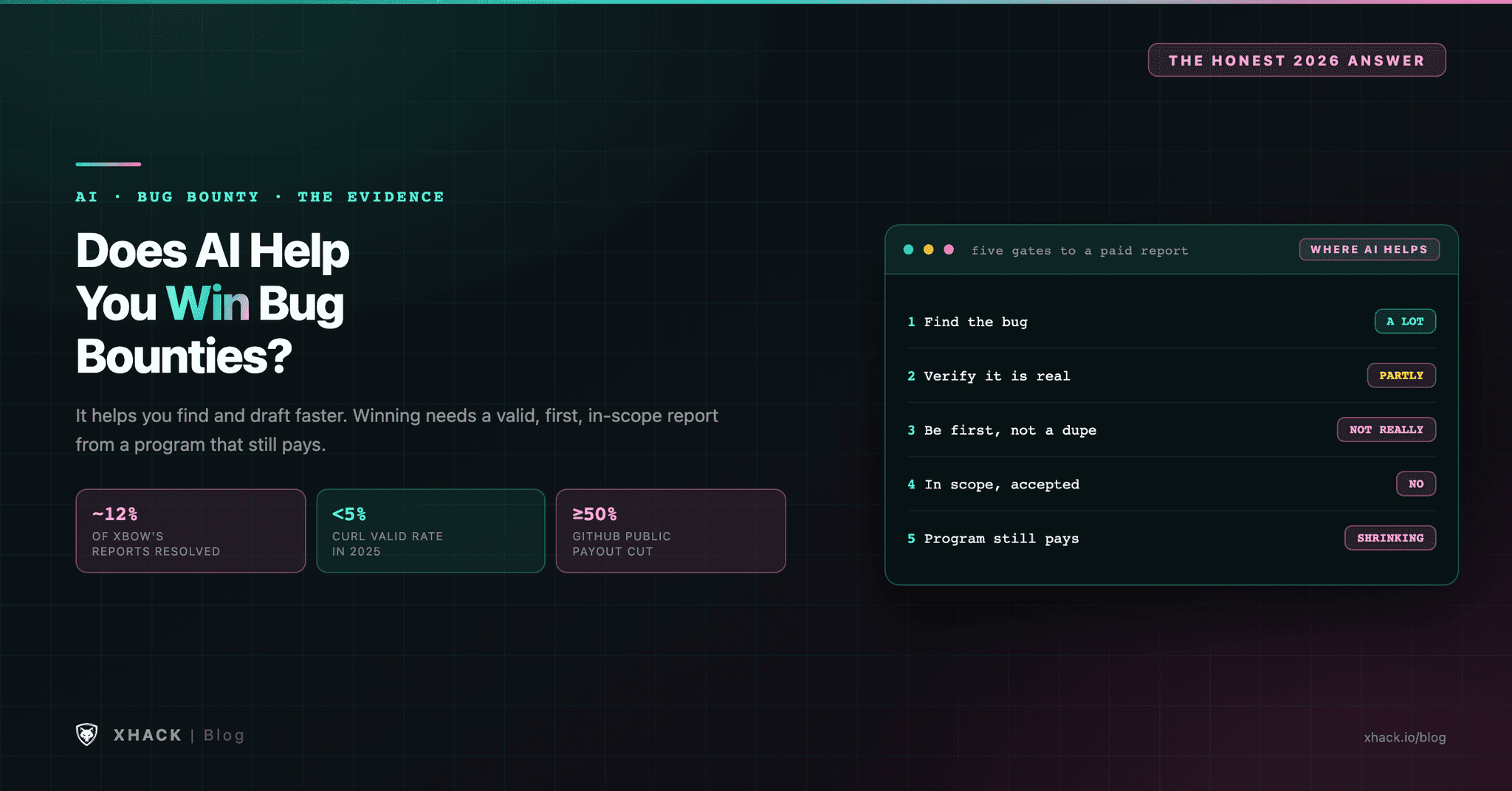
The 2026 market adds a cost. As we covered in our piece on whether AI helps you win bug bounties, GitHub cut public payouts by at least half on July 27 and limited new researchers to four initial submissions, and HackerOne paused the Internet Bug Bounty. Is bug bounty worth it on a program that’s cutting what it pays? Check before you commit hours.
Legal risk is a real cost, and it’s lower than it used to be. On May 19, 2022, the Department of Justice revised its policy so that prosecutors won’t charge “good-faith security research” under the Computer Fraud and Abuse Act, per law-firm summaries. The research must avoid harm and be used mainly to improve security, and DOJ said claiming to do research is not a free pass.
The limits matter. The Electronic Frontier Foundation pointed out that the policy doesn’t bind courts, can be rescinded, and doesn’t address state laws or private lawsuits.
Hunters weigh this heavily. Legal safe harbor appeared in the research both as a reason to choose a program and as a benefit of bounty hunting. Is bug bounty worth it legally? Yes, if you stay in scope and read each program’s safe-harbor terms. Not if you improvise.
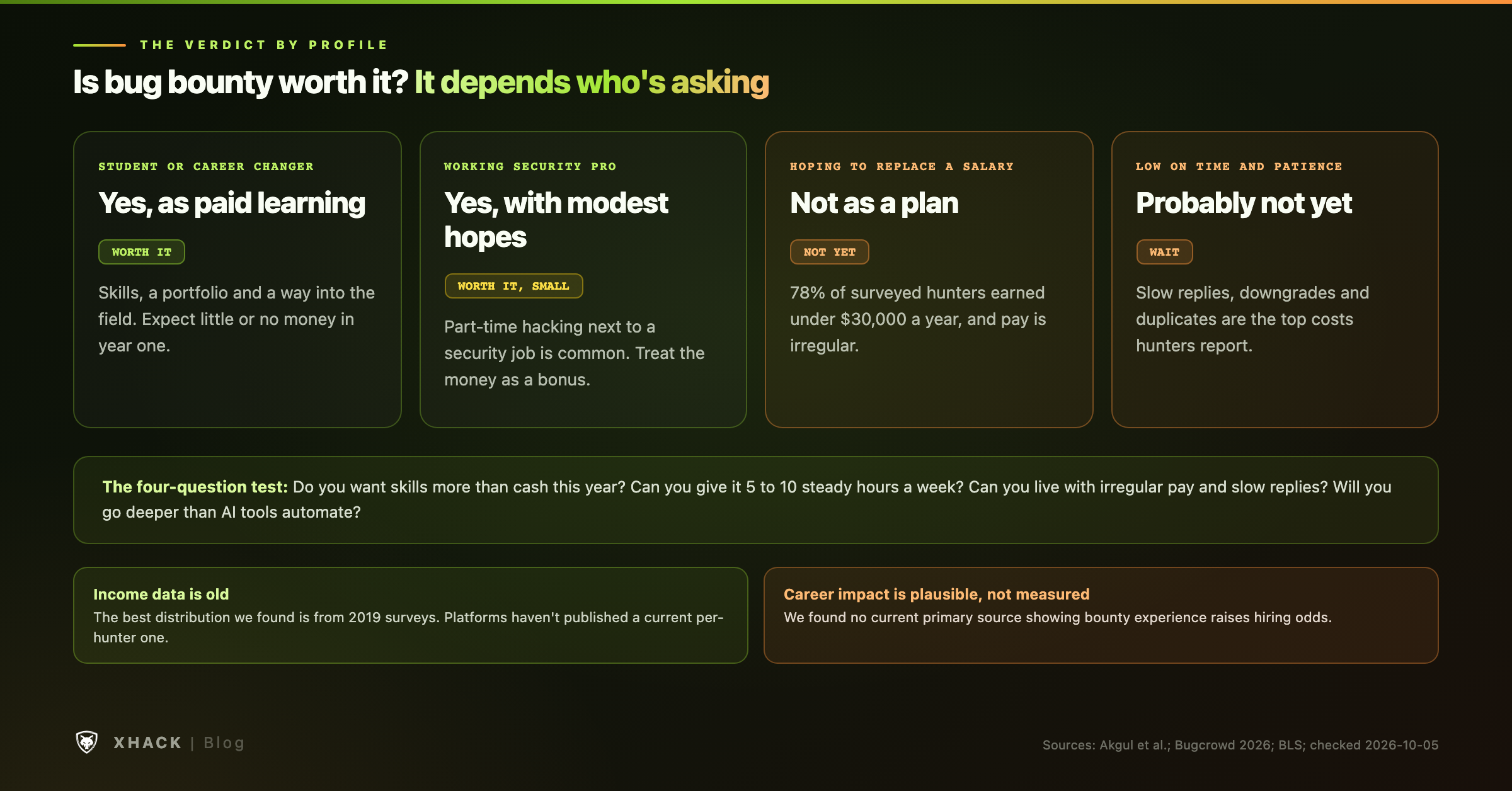
Is bug bounty worth it for you? Answer these honestly:
Here’s how it plays out by profile:
| If you are | Is bug bounty worth it? |
|---|---|
| A student or career changer | Yes, as paid learning and a portfolio |
| A working security professional | Yes, as skill-building and side income, with modest expectations |
| Hoping to replace a salary soon | Not as a plan, based on the income data |
| Short on time and patience for ambiguity | Probably not yet |
We build XHack AI for bug hunters, and if you’ve decided the answer to “is bug bounty worth it” is yes for you, it’s the tool we’d want in your hands. We’re not neutral, so here’s exactly what it does rather than a ranking.
serve public gives a VPS a remote-accessible console in one word. See Web Console.On our own run documented in AI VAPT services, the agent was pointed at a fintech bug bounty program with the instruction “recon, pick your own target, go,” and it found, validated and packaged an OAuth credential exposure in 25 minutes for about $5 in compute. That’s one run, and the $5 was cost, not income.
What the agent does is lower what each attempt costs you. It doesn’t create signal, scope knowledge or judgment, and we say so in our guide to the XHack AI agent for bug bounty. Individual plans start at $20 a month, with a 7-day free trial and no credit card. Use the free week to see whether it helps you produce a finding you can verify yourself.
Yes as paid learning, not as income. In the 2019 survey, 29% of respondents earned under $1,000 a year and about half worked under 10 hours a week. Treat the first year as skill-building and expect little or no money.
It can be, but AI isn’t a shortcut. Bugcrowd reports 82% of hackers use AI, so it’s table stakes, and programs like GitHub have cut public payouts and gated newcomers. Verified, specialized findings are what still pay.
Is bug bounty worth it compared to a job? Hour for hour, usually not. US information security analysts have a median wage of about $129,180, roughly $62 an hour. A hunter working 10 hours a week would need about $32,300 a year to match it, which only about a fifth of surveyed respondents reported.
Is bug bounty worth it as side income? Only with modest expectations. Of 2019 survey respondents, 78% earned under $30,000 a year, and about half worked under 10 hours a week. It’s a decent side project for skills and a small bonus, not a dependable second paycheck.
Is bug bounty worth it if you already have a security job? Often yes. Part-time hacking alongside a full-time security role is common in Bugcrowd’s survey, and it builds skills your day job may not. Just expect modest money and check your employer’s policy on outside work.
In good faith and in scope, DOJ’s 2022 policy says it won’t charge research under the CFAA. But it’s a policy, not a law, and it doesn’t cover state laws or private lawsuits. Stay in scope and read each program’s safe-harbor terms.
Some do, but most don’t. In the 2019 survey, 78% of respondents earned under $30,000 a year. See our full breakdown of what bug bounty hunters make.
Is bug bounty worth it in 2026? It’s worth it if you value the skills and the career signal, can live with irregular pay, and treat income as a bonus, not a plan. It isn’t worth it if you need money by next quarter or can’t stand ambiguity.
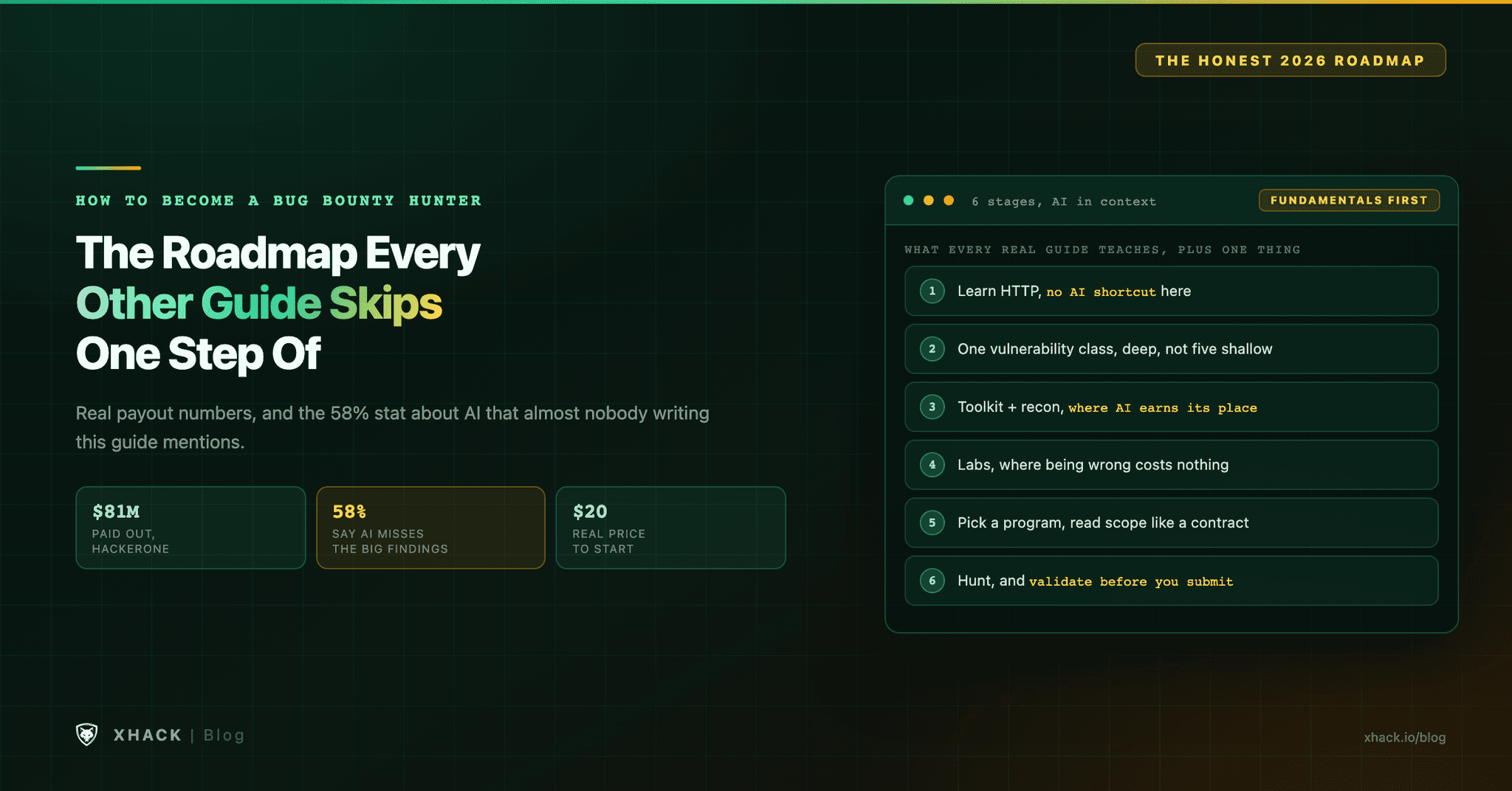
If you’re in the first group, start with our roadmap to becoming a bug bounty hunter, pick programs for fit, track your hours, and verify everything before you submit. The hunters who get the most out of bug bounty usually aren’t the fastest, they’re the ones who keep going.
Categories
Related articles